
How Custom Stonework Improves Drainage Around Patios in Dallas and Preston Hollow, TX Homes
Patio drainage problems rank among the most common outdoor issues homeowners face in Dallas and Preston Hollow, TX. Heavy rain events, clay-rich soil, and flat yard layouts often combine to create pooling water around patios. Over time, standing water damages surfaces, creates slippery conditions, and shortens the lifespan of outdoor features.
Custom stonework offers more than visual appeal. Properly designed stone patios and surrounding features play a major role in managing water movement. Thoughtful layout, grading, and material choices help guide runoff away from living spaces while maintaining a clean, cohesive look.
Homeowners who understand how stonework supports drainage make smarter decisions during patio planning and upgrades.
Why Patio Drainage Problems Appear in Dallas and Preston Hollow
North Texas soil holds moisture longer than many homeowners expect. Clay soil expands when wet and contracts when dry, which affects how water travels across outdoor surfaces. Flat or poorly sloped patios allow rainwater to settle instead of draining away.
Preston Hollow properties often feature larger lots with mature landscaping and hardscape transitions. These transitions create natural collection points for water if the patio lacks proper slope or edge control. Dallas homes experience similar challenges, especially in neighborhoods with older construction.
Without intentional drainage planning, patios become water traps rather than functional living spaces.
How Custom Stonework Supports Natural Water Flow
Custom stonework allows precise control over surface elevation. Each stone placement contributes to subtle slope adjustments that move water in the intended direction.
Unlike poured surfaces that rely on a single slope, stone systems distribute drainage across multiple joints and channels. Water flows between stones rather than sitting on top of a solid slab. This design reduces surface pooling and encourages gradual runoff.
Custom layouts also adapt to existing yard conditions instead of forcing uniform solutions that ignore site realities.
The Role of Grading in Stone Patio Drainage
Grading refers to how the ground slopes away from structures. Stone patios allow grading adjustments that guide water away from foundations and seating areas.
During installation, stone layers rest on compacted base material that supports controlled slope. Each layer contributes to drainage performance. Proper grading ensures water moves toward designated exit points rather than collecting near the home.
This approach protects patios and nearby structures from moisture damage over time.
Joint Spacing and Water Movement
Joint spacing between stones plays a critical role in drainage performance. Tight spacing restricts water movement. Thoughtful spacing allows water to filter through the surface rather than pooling.
The joints act as micro drainage channels. Rainwater passes through gaps and reaches the underlying layers designed to move water away safely. This system reduces surface saturation during heavy rainfall. Joint design also improves surface traction and long-term stability.
Stone Selection and Drainage Performance
Different stone types interact with water in unique ways. Texture, thickness, and surface finish influence how water behaves during rainfall.
Natural stone with a subtle texture provides better water dispersion than smooth finishes. Thickness consistency ensures stable placement and proper slope alignment. Stone selection should match drainage goals rather than focusing only on appearance. Custom stonework allows material choice based on site needs, not trends alone.
Integrating Stonework With Drainage Systems
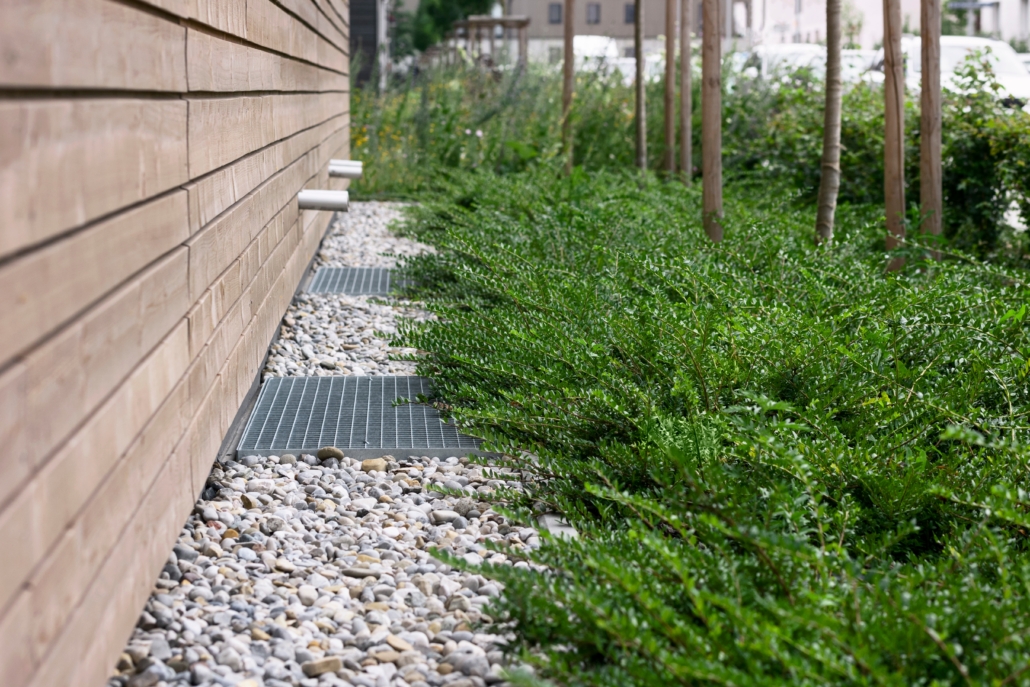
Stone patios often work best alongside additional drainage solutions. French drains, catch basins, or channel drains integrate seamlessly with stone layouts.
Stone edges guide water toward these systems without drawing attention. The patio remains visually cohesive while managing runoff efficiently. This integration reduces erosion and prevents water from reaching unwanted areas. A well-planned system balances visible design with hidden function.
Preventing Long-Term Patio Damage Through Drainage Design
Standing water weakens patio foundations. Freeze and thaw cycles worsen this damage even in mild North Texas winters. Poor drainage also leads to shifting stones and uneven surfaces.
Custom stonework addresses these risks through layered construction and controlled water movement. The result supports stability and durability across seasons.
Homeowners benefit from surfaces that remain level, safe, and visually consistent year after year.
Why Custom Stonework Outperforms Standard Patio Solutions
Standard patio installations often prioritize speed over site adaptation. Generic slopes and minimal drainage planning fail under real weather conditions.
Custom stonework responds to each property’s layout, soil behavior, and water flow patterns. This tailored approach reduces maintenance issues and extends patio lifespan.
Dallas and Preston Hollow homes benefit from solutions that respect local conditions rather than relying on one-size-fits-all designs.
Common Drainage Mistakes Around Patios
Several mistakes contribute to drainage failure:
- Flat patio surfaces without directional slope
- Inadequate base preparation beneath stonework
- Poor joint spacing that traps water
- Lack of integration with yard drainage systems
- Ignoring soil behavior during design
Custom stonework planning avoids these issues by addressing them from the start.
How Homeowners Benefit From Drainage-Focused Stone Design
Drainage-focused stonework improves patio usability. Surfaces dry faster after rainfall. Seating areas remain comfortable. Walkways stay safer during wet conditions.
This approach also protects surrounding features such as retaining walls, steps, and adjacent hardscapes. Water control supports the entire outdoor layout rather than a single surface.
The result feels intentional, balanced, and functional.
Custom Stonework in Dallas and Preston Hollow Properties
Properties in Dallas and Preston Hollow often feature complex layouts. Slopes vary, structures sit close to patios, and outdoor living spaces see frequent use.
Custom stonework adapts to these conditions through thoughtful planning and precise installation. Each stone contributes to water movement control without compromising aesthetics.
Homeowners gain peace of mind knowing their patios handle rain events effectively.
Frequently Asked Questions About Patio Drainage and Custom Stonework in Dallas and Preston Hollow, TX
Can stone patios handle heavy rainfall better than concrete?
Stone patios manage water more effectively through joint drainage and layered construction.
Does custom stonework require additional drainage systems?
Some patios benefit from integrated drainage systems depending on property layout.
How does stone spacing affect drainage?
Proper spacing allows water to pass through rather than pooling on the surface.
Can existing patios improve drainage with stone upgrades?
Stone overlays or surrounding features often enhance drainage performance.
Do larger properties need different drainage approaches?
Larger lots often require customized grading and water routing strategies.
Stewart Lawncare & Landscape designs custom stonework that improves patio drainage in Dallas and Preston Hollow, TX. Call 972‑429‑1921 to discuss your project.

