

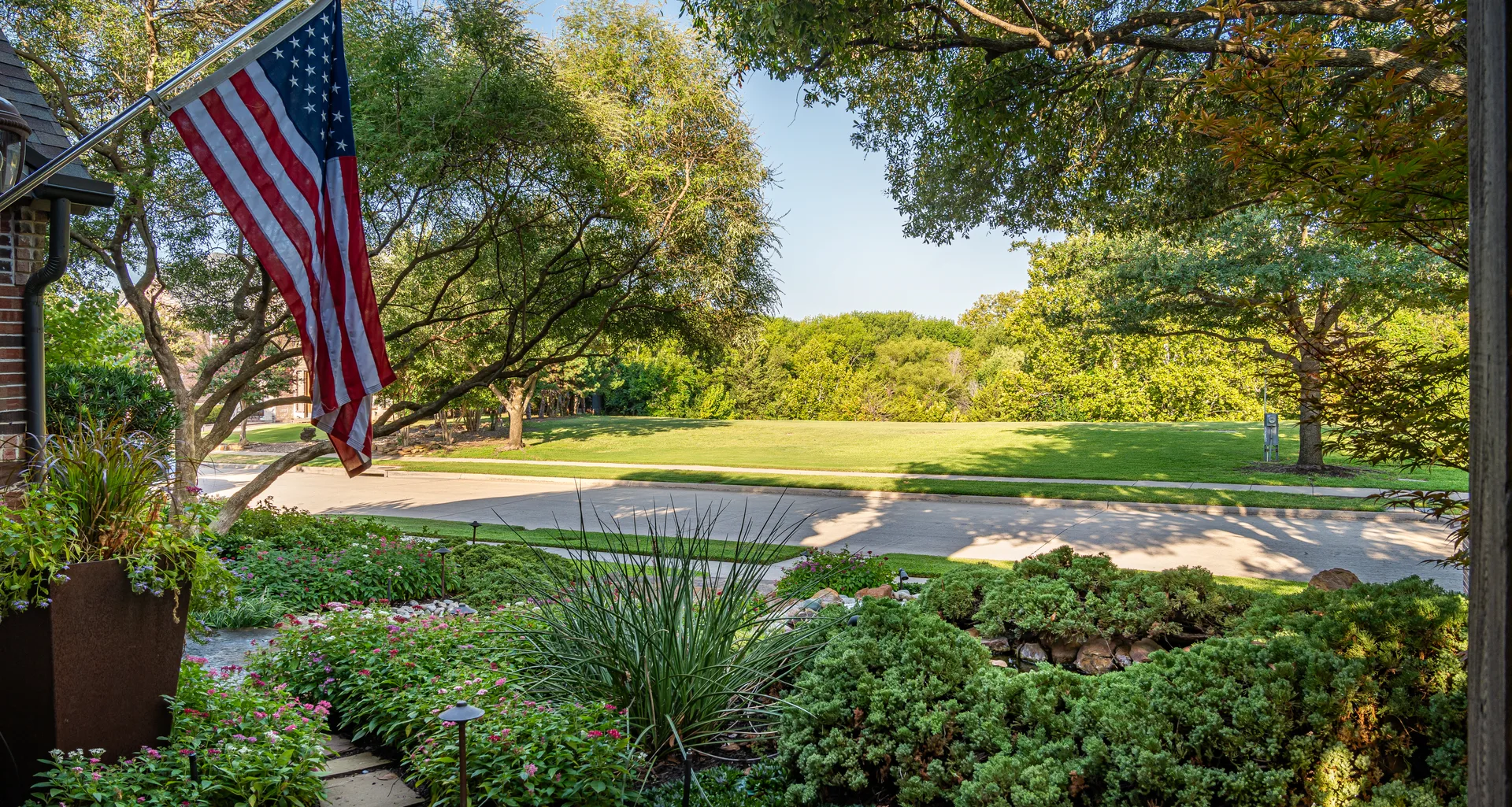
Outdoor Lighting Services in Garland, TX
Stewart Lawncare & Landscape designs and installs professional outdoor lighting systems throughout Garland, TX, enhancing property safety, security, and nighttime beauty. Our outdoor lighting services create layered illumination strategies combining pathway safety lighting, architectural accent fixtures, landscape highlighting, security coverage, and entertainment area illumination. Each lighting design addresses your property’s specific layout, architectural features, landscape elements, and functional requirements while accounting for Garland’s climate conditions and energy efficiency goals. We use low-voltage LED systems offering superior energy performance, minimal heat output, and extended fixture lifespan compared to traditional lighting technologies. Our installation process includes transformer sizing and placement, wire routing for optimal coverage, fixture selection for intended applications, photocell and timer integration, and smart control options enabling remote operation and scheduling. Professional outdoor lighting extends property usability into evening hours, improves safety along pathways and entry areas, deters unwanted visitors, and showcases architectural and landscape investments after dark.
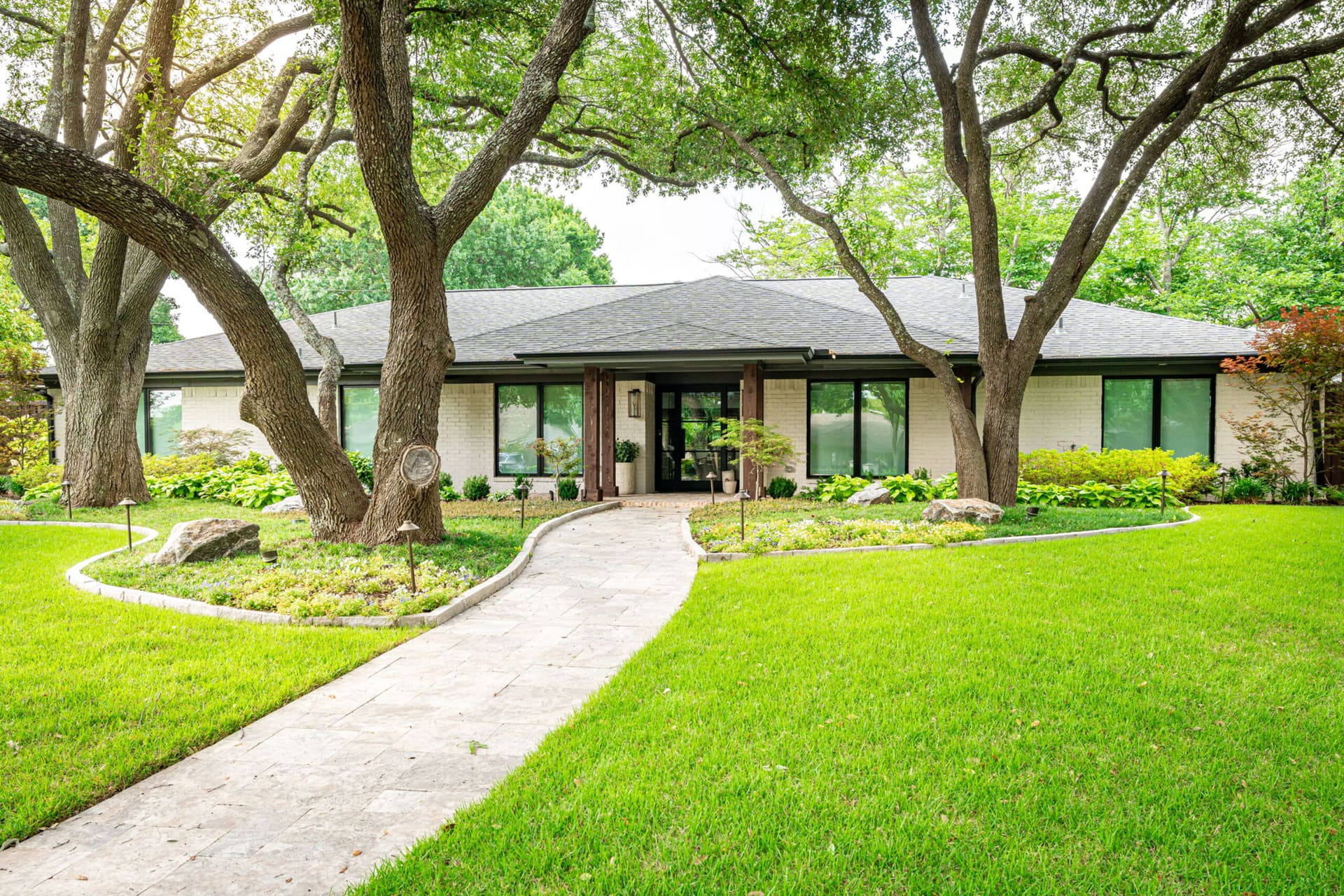
Stewart Lawncare & Landscape provides comprehensive outdoor lighting design and installation for Garland, TX properties, including pathway safety lighting, architectural accents, landscape highlighting, security coverage, and smart control systems. Our low-voltage LED installations deliver energy efficiency, reliable performance, and beautiful nighttime appeal. Call 972-429-1921 to schedule your lighting consultation and receive a custom design proposal.
What Our Outdoor Lighting Service Includes
Our outdoor lighting service encompasses complete design, installation, and ongoing support for residential and commercial properties. Design services include site evaluation during evening hours to assess existing conditions, lighting goal identification for safety and aesthetics, fixture selection for specific applications, transformer sizing calculations, control system planning, and integration with landscape and architectural features. Installation work covers transformer mounting and electrical connections, underground wire burial in landscape beds and turf areas, fixture placement and aiming, connection weatherproofing, photocell and timer installation, and complete system testing. Pathway lighting illuminates walkways, driveways, and entry routes preventing trip hazards and guiding movement. Accent lighting highlights architectural features, specimen plants, and focal points creating visual interest. Security lighting covers property perimeters, entry points, and dark zones deterring unwanted activity. Entertainment area lighting serves patios, outdoor kitchens, and gathering spaces with task and ambient illumination. Smart controls enable smartphone operation, scheduling, and scene programming. Maintenance services include bulb replacement, fixture cleaning, timer adjustments, and system expansion as landscapes mature.
Outdoor Lighting Service Components:
- Evening site evaluation and design development
- Low-voltage LED system specification
- Transformer sizing and placement
- Underground wire installation and routing
- Fixture selection for specific applications
- Pathway and safety lighting placement
- Architectural and landscape accent lighting
- Security and perimeter coverage
- Smart control and automation integration
- Seasonal adjustments and maintenance support
Low-Voltage LED Lighting Systems
Low-voltage LED technology provides the optimal lighting solution for Garland landscapes through energy efficiency, cool operation, and long service life. Low-voltage systems operate at 12 or 15 volts rather than standard 120-volt household current, reducing electrical hazards and installation complexity. LED fixtures consume 75 to 90 percent less energy than incandescent equivalents while producing comparable or superior light output. Minimal heat generation prevents plant damage from fixture proximity and reduces cooling loads on nearby structures during the summer months. Component lifespan typically exceeds 50,000 hours, translating to 10 to 15 years of operation before bulb replacement compared to annual changes with traditional bulbs. Color temperature selection ranges from warm whites mimicking incandescent appearance to cool whites providing crisp illumination, with most landscape applications favoring 2700K to 3000K warm tones. Dimming capability enables light level adjustment for different occasions and times of evening. Transformer efficiency minimizes energy waste during voltage conversion. Environmental benefits include reduced power consumption, fewer bulb replacements creating waste, and mercury-free operation unlike compact fluorescent alternatives. Installation cost premiums for LED technology are offset quickly through energy savings and reduced maintenance expenses over system’s lifespan.
LED System Advantages:
- 75 to 90 percent energy reduction vs. incandescent
- 50,000+ hour bulb lifespan
- Cool operation preventing plant and material damage
- Color temperature options for desired ambiance
- Dimming capabilities for flexibility
- Low-voltage safety and installation ease
- Minimal transformer energy waste
- Mercury-free environmental benefits
- Reduced long-term operating costs
- Superior weather and impact resistance
Layered Lighting Design Strategy
Professional outdoor lighting employs a layered design combining multiple lighting types creating comprehensive coverage and visual interest. Pathway lighting places fixtures at regular intervals along walks, driveways, and frequently traveled routes, typically 8 to 10 feet apart for continuous illumination without dark gaps. Downlighting mounts fixtures in trees or structures directing light downward, mimicking natural moonlight and illuminating larger ground areas. Uplighting positions fixtures at ground level aiming upward to highlight tree trunks, architectural features, or vertical surfaces creating drama and dimension. Accent lighting draws attention to focal points including specimen plants, sculpture, water features, or architectural details using spotlights or well lights. Silhouette lighting places fixtures behind objects creating dramatic outlines against walls or backgrounds. Grazing illuminates textured surfaces like stone walls or bark at sharp angles emphasizing depth and character. Step and deck lighting prevents trip hazards on elevation changes through small fixtures integrated into structures. Security lighting covers entry points, dark corners, and perimeter areas with motion-activated or constant illumination. Proper layering balances these techniques avoiding over-lighting that creates glare or excessive brightness while ensuring adequate coverage for all functional and aesthetic goals.
Lighting Layer Types:
- Pathway illumination for safe navigation
- Downlighting from elevated positions
- Uplighting for trees and architectural features
- Accent spotlights for focal points
- Silhouette backlighting for drama
- Grazing for textured surface emphasis
- Step and elevation change safety lighting
- Security coverage with motion activation
- Entertainment area task and ambient lighting
- Balanced overall design avoiding glare
Transformer Sizing and Electrical Requirements
Transformer selection and placement form the foundation for reliable low-voltage lighting system performance. Transformer sizing calculations account for the total wattage of all connected fixtures plus 20 percent capacity buffer for future expansion. Voltage drop occurs over wire distance, with longer runs requiring larger gauge wire or multiple transformers preventing dimming at circuit ends. Most residential systems use 300 to 600-watt transformers, with larger properties requiring multiple units distributed across zones. Transformer placement considers proximity to power sources, central location relative to fixtures, weather protection, and aesthetic concealment. Weatherproof enclosures protect transformers from rain and moisture while allowing heat dissipation. Timer integration enables automatic on/off scheduling, with photocells providing dusk-to-dawn operation. Multi-tap transformers offer voltage adjustment compensating for line loss on longer circuits. GFCI protection prevents electrical hazards in wet outdoor environments. Professional installation ensures proper electrical connections, adequate wire sizing, and code compliance. Transformer quality affects system reliability, with commercial-grade units providing superior performance and longevity compared to consumer-grade alternatives. Regular maintenance includes connection inspection, timer verification, and voltage testing ensuring consistent fixture performance across entire systems.
Transformer System Elements:
- Proper wattage calculation with expansion buffer
- Multi-tap voltage adjustment capabilities
- Strategic placement for coverage and access
- Weatherproof enclosures for protection
- Timer and photocell integration
- GFCI circuit protection
- Commercial-grade reliability
- Wire gauge sizing for voltage maintenance
- Dedicated circuit electrical service
- Professional installation and code compliance
Fixture Selection and Application-Specific Design
Fixture selection matches specific applications ensuring optimal performance and longevity in outdoor environments. Path lights place illumination at ground level along walkways using mushroom-style fixtures, bollards, or low-profile designs preventing glare while providing adequate visibility. Spotlights direct focused beams highlighting specific features, available in various beam widths from narrow spots to wide floods. Well lights install flush with ground surfaces, ideal for uplighting trees or architectural elements without visible fixture intrusion. Wall wash fixtures create even illumination across vertical surfaces using elongated beam patterns. Step lights integrate into risers or adjacent walls providing low-level guidance on elevation changes. Deck and hardscape lights built into structures deliver safety illumination without occupying surface space. Underwater lights illuminate water features requiring special waterproof ratings and corrosion resistance. Motion sensor fixtures activate upon detecting movement, serving security applications or energy conservation. Material construction includes cast brass for durability, composite materials for cost efficiency, and stainless steel for modern aesthetics. Lens options control beam spread and glare. Fixture ratings specify wet location approval essential for landscape installations exposed to irrigation and weather. These application-specific selections ensure each lighting element performs its intended function reliably.
Fixture Types and Applications:
- Path lights for walkway illumination
- Spotlights for accent and highlighting
- Well lights for flush ground installation
- Wall wash fixtures for even coverage
- Integrated step and deck lighting
- Underwater fixtures for water features
- Motion-activated security lights
- Brass, composite, and steel construction options
- Wet location weatherproof ratings
- Beam control through lens selection
Smart Controls and Automation Features
Smart lighting controls provide convenience, energy savings, and enhanced functionality through automated operation and remote access. Timer systems schedule on/off cycles matching seasonal sunset and sunrise variations, eliminating manual adjustment throughout the year. Photocells sense ambient light levels, activating systems at dusk and deactivating at dawn regardless of time. Smartphone apps enable remote control from any location, allowing schedule changes, manual override, or system checks while away from the property. Scene programming creates preset lighting configurations for different occasions, activating specific fixture groups at designated brightness levels. Dimming capabilities adjust light intensity for varied needs, reducing brightness during late evening hours or increasing it for special events. Motion sensors trigger lights upon detecting movement, enhancing security while conserving energy during periods without activity. Integration with home automation platforms coordinates lighting with other smart systems including security, climate control, and audio. Voice control through smart speakers enables hands-free operation. Zoning separates systems into independently controlled areas, operating front and back yards on different schedules. Energy monitoring tracks consumption patterns identifying opportunities for efficiency improvements. These advanced controls transform basic lighting into sophisticated systems enhancing convenience, security, and efficiency.
Smart Control Features:
- Astronomical timer automatic seasonal adjustment
- Photocell dusk-to-dawn operation
- Smartphone app remote access
- Scene programming for varied configurations
- Dimming for intensity control
- Motion sensor activation for security
- Home automation platform integration
- Voice control capability
- Independent zone management
- Energy consumption monitoring
Installation Process and Property Integration
The installation process follows systematic procedures ensuring quality results with minimal landscape disruption. Initial consultation includes daytime property evaluation, goal discussion, and preliminary fixture placement planning. Evening site visit allows assessment of existing conditions, identification of dark zones requiring coverage, and determination of desired effects. Design development produces detailed plans showing fixture locations, wire routing, transformer placement, and control system specifications. Proposal presentation reviews complete design with fixture counts, equipment specifications, and installation timeline. Pre-installation preparation coordinates utility locates, confirms power source access, and schedules material delivery. Installation begins with transformer mounting and electrical connection by licensed personnel. Wire trenching uses specialized equipment to create narrow channels through landscape beds and turf, with immediate restoration minimizing visual impact. Fixture placement follows design specifications with on-site adjustment ensuring optimal aiming and effect. Connection weatherproofing protects wire joints from moisture intrusion. System testing verifies that all fixtures operate correctly with proper voltage delivery. Final walkthrough demonstrates control operation, discusses maintenance requirements, and confirms satisfaction. Most residential installations are complete within one to two days depending on fixture count and property size.
Installation Process Steps:
- Daytime and evening site consultations
- Detailed design and fixture placement plan
- Equipment and material specification
- Licensed electrical transformer connection
- Narrow trench wire routing
- Minimal landscape disturbance techniques
- Fixture placement with adjustment optimization
- Weatherproof connection protection
- Complete system testing and voltage verification
- Control demonstration and owner training
Outdoor Lighting Problems We Solve for Garland Property Owners
Garland homeowners encounter specific outdoor lighting challenges requiring professional design and installation expertise. Our services address these common problems.
Outdoor Lighting Problems We Solve:
- Dark entry paths and walkways: creating trip hazards and unsafe navigation during evening hours without adequate illumination
- Security vulnerabilities from unlit areas: providing concealment opportunities for unwanted visitors approaching property undetected
- Glare from poorly aimed fixtures: causing visual discomfort, light trespassing onto neighboring properties, and ineffective illumination
- Voltage drop at circuit ends: resulting in dim fixtures farthest from transformers due to undersized wire or improper calculations
- Frequent bulb replacement requirements: from low-quality fixtures or traditional incandescent technology requiring constant maintenance
- Excessive energy consumption: from outdated lighting systems without LED efficiency or smart controls managing operation
- Inadequate coverage of outdoor living spaces: limiting evening entertainment and property enjoyment after sunset
- Landscape damage from fixture heat: with traditional high-wattage bulbs burning nearby plants and materials
- Unreliable timer operation: failing to adjust for seasonal daylight changes or malfunctioning after power interruptions
- Unattractive daytime fixture appearance: with visible lights detracting from landscape aesthetics during daylight hours
FAQs About Outdoor Lighting in Garland, TX
How much does outdoor lighting installation cost in Garland?
Installation costs depend on fixture count, property size, system complexity, and control features. Basic pathway lighting for small properties starts at lower price points. Comprehensive systems with architectural accents, landscape highlighting, and smart controls require larger investment. Per-fixture costs include equipment, wire, connectors, and labor. Transformer and control system expenses add to total. We provide detailed estimates after site evaluation showing all components and installation work included.
What is the best type of outdoor lighting for Garland properties?
Low-voltage LED systems offer optimal performance for North Texas landscapes. LEDs provide energy efficiency, cool operation during hot summers, long lifespan, and superior light quality. Low-voltage operation ensures safety and installation flexibility. Fixture selection varies by application with path lights for walkways, spotlights for accents, and well lights for uplighting. Comprehensive designs layer multiple fixture types creating balanced coverage for safety, security, and aesthetics.
How long do outdoor lighting systems last?
LED fixtures typically operate 50,000 hours before requiring bulb replacement, translating to 10 to 15 years with average evening use. Transformers and wiring last 20+ years with proper installation. Fixture housings endure similarly with quality construction. Timer and control components may need replacement every 7 to 10 years. Regular maintenance including connection inspection and fixture cleaning extends overall system lifespan. Professional-grade equipment outlasts consumer alternatives significantly.
Do outdoor lights need to be turned off during the day?
Timers and photocells automate operation, turning lights on at dusk and off at dawn or programmed times. Manual systems require daily adjustment. Leaving lights on during daylight wastes energy and reduces bulb lifespan. Automated controls eliminate the need for manual intervention while optimizing energy use. Most installations include photocells or astronomical timers managing operation automatically throughout seasonal daylight variation.
Can outdoor lighting be added to existing landscapes?
Professional installation integrates lighting into established landscapes with minimal disruption. Narrow trenching equipment creates wire channels through beds and turf with immediate restoration. Fixture placement avoids mature plant root zones. Design accommodates existing features, highlighting architectural elements and specimen plantings. Careful routing protects irrigation systems and underground utilities. Mature landscapes often provide ideal opportunities for lighting showcasing developed trees and gardens.
What permits does Garland require for outdoor lighting?
Most low-voltage landscape lighting installations do not require permits. Electrical work connecting transformers to household power should follow code requirements. Professional installations ensure compliance with National Electrical Code standards. Projects involving significant electrical work or commercial properties may trigger permit requirements. We coordinate any necessary approvals as part of installation services. Homeowners associations may have lighting restrictions requiring review before installation.
How do you prevent light pollution and neighbor complaints?
Proper fixture selection, placement, and aiming direct light where intended rather than spilling onto neighboring properties or creating sky glow. Shielded fixtures prevent upward light emission. Glare reduction uses appropriate wattages and beam angles. Strategic positioning illuminates property features without trespassing beyond boundaries. Timer controls limit late-night operation if concerns exist. Professional design balances adequate lighting with responsible installation respecting neighbors and dark sky principles.
What maintenance do outdoor lighting systems require?
LED systems need minimal maintenance compared to traditional lighting. Annual tasks include fixture cleaning removing debris and insects, connection inspection ensuring weatherproof integrity, timer adjustment for seasonal changes, and voltage testing confirming proper delivery. Bulb replacement occurs every 10 to 15 years with LEDs versus annually with incandescent. Landscape changes may require fixture repositioning as plants mature. Professional maintenance programs handle all service requirements.
Can outdoor lighting systems be controlled by smartphones?
Smart control integration enables smartphone operation through dedicated apps or home automation platforms. Remote access allows schedule changes, manual override, dimming adjustment, and system monitoring from any location. Scene programming creates preset configurations activated with single commands. Voice control through smart speakers provides hands-free operation. Retrofit kits add smart capability to existing systems. New installations easily incorporate latest control technologies.
How does outdoor lighting affect energy bills?
LED outdoor lighting consumes minimal electricity due to extreme efficiency. Typical residential systems use 100 to 300 watts total when operating, costing $5 to $15 monthly depending on rates and operation duration. Smart controls reduce consumption through automated operation and dimming. Compared to traditional incandescent systems, LED installations cut lighting energy use by 75 to 90 percent. Solar options eliminate electrical costs but offer limited performance and reliability.
Transform Your Garland Property with Professional Outdoor Lighting
Stewart Lawncare & Landscape has designed and installed outdoor lighting systems across Garland, TX since 1993, with expertise in low-voltage LED technology, smart controls, and energy-efficient solutions. Our complete services include evening site evaluation, custom design, professional installation, and ongoing maintenance support. Call 972-429-1921 to schedule your lighting consultation and illuminate your property.