

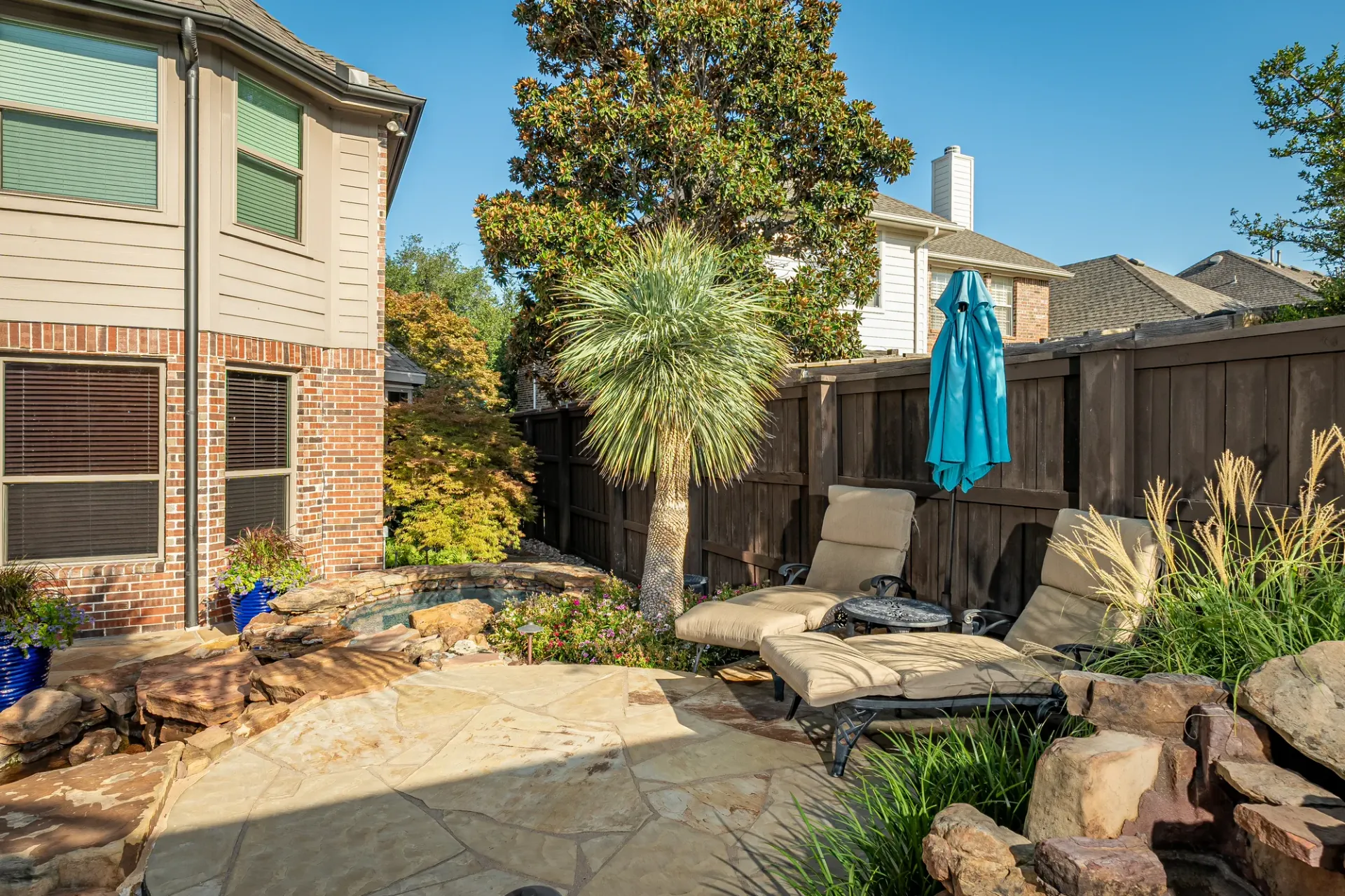
Retaining walls do a lot more than hold back soil. In many Dallas and Lakewood yards, they help shape the layout, create usable levels, define patios, border walkways, and support outdoor living areas. During the day, most people notice the stone, the structure, and the way the wall fits into the landscape. At night, something else matters just as much: visibility.
Lighting placement around retaining walls can make a major difference in how safe an outdoor space feels and functions after dark. A wall that looks attractive in daylight can become a hazard at night when edges disappear, elevation changes are hard to judge, and pathways lose definition. Good lighting helps people see where they are going, recognize level changes, and move through the yard with more confidence.
In Dallas and Lakewood, outdoor spaces often serve as an extension of the home. Families entertain outside, walk through the yard in the evening, spend time on patios, and use the pool or lawn areas well after sunset. That means retaining wall lighting should not be treated like a small finishing touch. It should be part of how the space works safely every day.
Why Retaining Walls Create Safety Concerns At Night
Retaining walls introduce elevation changes. That is part of their purpose. They separate levels, support slopes, and create cleaner transitions in a yard. Those same benefits can also create risks when visibility drops.
A low wall along a patio edge may seem obvious during the day, but it can blend into surrounding materials at night. A taller retaining wall near steps or a walkway can cast deep shadows that make it harder to read the space correctly. Even small elevation changes can create tripping or misstep hazards when the eye cannot clearly pick up the edge.
This becomes more important in yards with multiple zones. A homeowner may move from a back door to a patio, from a patio to a lawn, or from a side path to a seating area. Retaining walls often guide those transitions. Poor lighting makes those routes less predictable. Good lighting makes them easier to understand.
Lighting Helps People Read Elevation Changes Clearly
One of the most important things outdoor lighting can do is help people read the shape of a space. That matters around retaining walls because the eye needs visual cues to understand where the surface changes.
Light placed too far away from the wall may brighten the general area without defining the edge. Light placed too harshly can create glare and actually make it harder to see the transition. Good placement helps show depth, edge lines, and level changes in a way that feels natural.
This is especially important in Dallas and Lakewood properties where retaining walls often frame entertaining spaces, side-yard transitions, or front-entry walks. Guests who are unfamiliar with the property need clear visual information. Homeowners benefit too, especially in spaces they use often in the evening. A safer yard is a yard that feels readable at night.
Walkways Near Retaining Walls Need Extra Attention
Many retaining walls sit directly beside a walkway or help define one side of a path. That relationship can work beautifully in the design, but it also means the path and wall need to be lit together rather than treated as separate features.
A path light placed without considering the retaining wall may leave the wall edge too dark. A light focused only on the wall may not provide enough guidance along the walking surface. Good design balances both needs. It should help people see where to walk and understand what sits beside them.
This matters even more where a walkway narrows, curves, or changes grade near a retaining wall. Small design decisions in lighting placement can reduce uncertainty and help people move comfortably through the space. In high-use outdoor areas, that kind of clarity improves both safety and ease of use.
Steps And Retaining Walls Should Work As One Visual System
Steps often connect directly to retaining walls. In many landscapes, the wall supports the grade while the steps provide access between levels. At night, these two elements need to read as one connected system. When steps are visible, but the adjacent retaining wall disappears into darkness, the area can still feel unsafe. The same is true when the wall is highlighted, but the steps themselves remain too dim.
Good lighting should help define the full transition. It should show the step edges, the nearby wall face, and the surrounding grade relationship. This gives the user a stronger sense of orientation.
Dallas and Lakewood outdoor spaces often include level changes because of lot shape, existing grade, or design preference. That makes it important to treat walls and steps as a shared safety zone. Proper lighting reduces hesitation and lowers the chance of missteps.
Retaining Wall Lighting Improves Patio Safety
Retaining walls frequently border patios, seating areas, and outdoor living spaces. In those settings, safety is not only about movement from one place to another. It is also about helping people recognize the boundary of the usable area.
A raised patio with a retaining wall edge can feel open and inviting during the day. At night, that edge may become harder to detect, especially during gatherings where people are talking, carrying food, or moving casually through the space. Lighting helps define the edge without making the area feel harsh or overlit.
Soft, well-placed lighting can outline the wall, clarify the limits of the patio, and support better movement around furniture and gathering zones. It also makes the space feel more comfortable to use in the evening. Safety does not need to feel clinical. In a well-designed landscape, it can feel seamless.
The Goal Is Visibility Without Harshness
Some homeowners assume more light automatically means better safety. That is not always true. Harsh brightness can create glare, flatten depth, and reduce the ability to judge surfaces clearly. Around retaining walls, which can make elevation changes harder to read instead of easier.
Good lighting placement focuses on visibility, not just brightness. The goal is to define surfaces, edges, and transitions in a way that feels balanced. A retaining wall does not need to be blasted with light. It needs enough illumination to make its location and relationship to the surrounding space easy to understand.
This balanced approach fits high-end outdoor spaces particularly well. Dallas and Lakewood homeowners often want a yard that feels polished at night, not overly bright or commercial. Smart lighting supports safety while still preserving atmosphere.
Material Color And Texture Affect How Light Works
Retaining wall lighting should also respond to the material itself. A dark stone wall reflects light differently than a lighter masonry surface. A smooth finish behaves differently from rough, textured stone. These details influence how much light is needed and where it should go.
A wall with heavy texture may cast deeper shadows, which can look beautiful but also needs careful handling near walking areas. A lighter wall may reflect enough light to brighten the area more than expected. Good placement accounts for these material traits instead of treating every retaining wall the same.
In Dallas and Lakewood, where outdoor spaces often include natural stone, pavers, or custom masonry, the relationship between material and lighting matters. It affects both appearance and safety. The right setup helps the wall contribute to visibility rather than working against it.
Lighting Supports Everyday Use, Not Just Entertaining
Retaining wall lighting helps during parties and evening gatherings, but its real value shows up in everyday use. A homeowner may walk the dog at night, take out the trash, move between the garage and backyard, check on kids outside, or enjoy a quiet evening on the patio. Those everyday moments are when outdoor safety matters most.
A yard should not require careful guesswork after dark. It should feel familiar and easy to move through. Retaining walls, because they define so many edges and transitions, play a large role in that experience. Lighting helps those structures do their job more safely after sunset.
This kind of practical comfort often gets overlooked during the design process. Yet it has a major effect on how often people actually enjoy the space they invested in.
Better Lighting Also Improves Spatial Comfort
Safety is one reason to light around retaining walls. Comfort is another. People feel more relaxed in a space where they can read clearly. A yard with dark drop-offs, hidden wall edges, or shadowy transitions can feel uneasy even when it looks attractive during the day.
Lighting gives the space a sense of order. It helps people understand the layout and feel more at ease moving through it. This becomes especially important for guests, children, and older family members who may need stronger visual cues at night.
Outdoor spaces should feel welcoming. A retaining wall that is clearly but softly defined helps create that feeling. It adds confidence without drawing too much attention to itself.
Proper Placement Matters More Than Just Adding Fixtures
Not every lighting plan around retaining walls improves safety. Placement matters. The height, spacing, direction, and purpose of each light all affect how well the area functions after dark.
A poorly placed fixture may create a bright spot and leave the actual edge too dark. Another may cause glare at eye level or interfere with the view from a patio. A safer result comes from understanding how the wall interacts with paths, steps, patios, and the surrounding grade.
That is why retaining wall lighting should be planned as part of the full landscape, not added at random. It works best when it supports how people actually use the property.
Safety And Design Should Support Each Other
Some homeowners worry that safety lighting will make their outdoor space feel too practical or too bright. In a well-designed landscape, the opposite is true. Safety and design should support each other. A retaining wall that is easy to see at night often looks better too because its form, texture, and role in the yard become clearer.
That balance is especially important in Dallas and Lakewood outdoor spaces, where design quality and usability often carry equal weight. A landscape should feel refined, but it should also work. Lighting around retaining walls helps achieve both goals.
The best outdoor spaces are not just attractive from the patio door. They are comfortable to walk through, easy to understand, and enjoyable to use after dark. Thoughtful lighting placement helps make that possible.
FAQs
What Makes Retaining Walls A Safety Concern At Night?
Retaining walls create edges and elevation changes that can become hard to see after dark without proper lighting.
Where Should Lighting Go Around A Retaining Wall?
Lighting should help define wall edges, nearby walkways, steps, and level changes so people can move through the space safely.
Can Retaining Wall Lighting Improve Patio Safety?
Yes. Lighting helps outline the edge of patios and nearby walls so people can better judge boundaries and elevation changes.
Does Brighter Lighting Always Improve Safety Around Walls?
No. Harsh light can create glare and reduce depth perception. Balanced lighting usually works better than overly bright fixtures.
Why Does Material Matter In Retaining Wall Lighting?
Stone color and texture affect how light reflects and where shadows fall, which changes how much light the wall needs.
Stewart Lawncare & Landscape helps homeowners improve outdoor safety and nighttime usability in Dallas and Lakewood, TX. Call (972) 429‑1921 to discuss outdoor lighting solutions.