

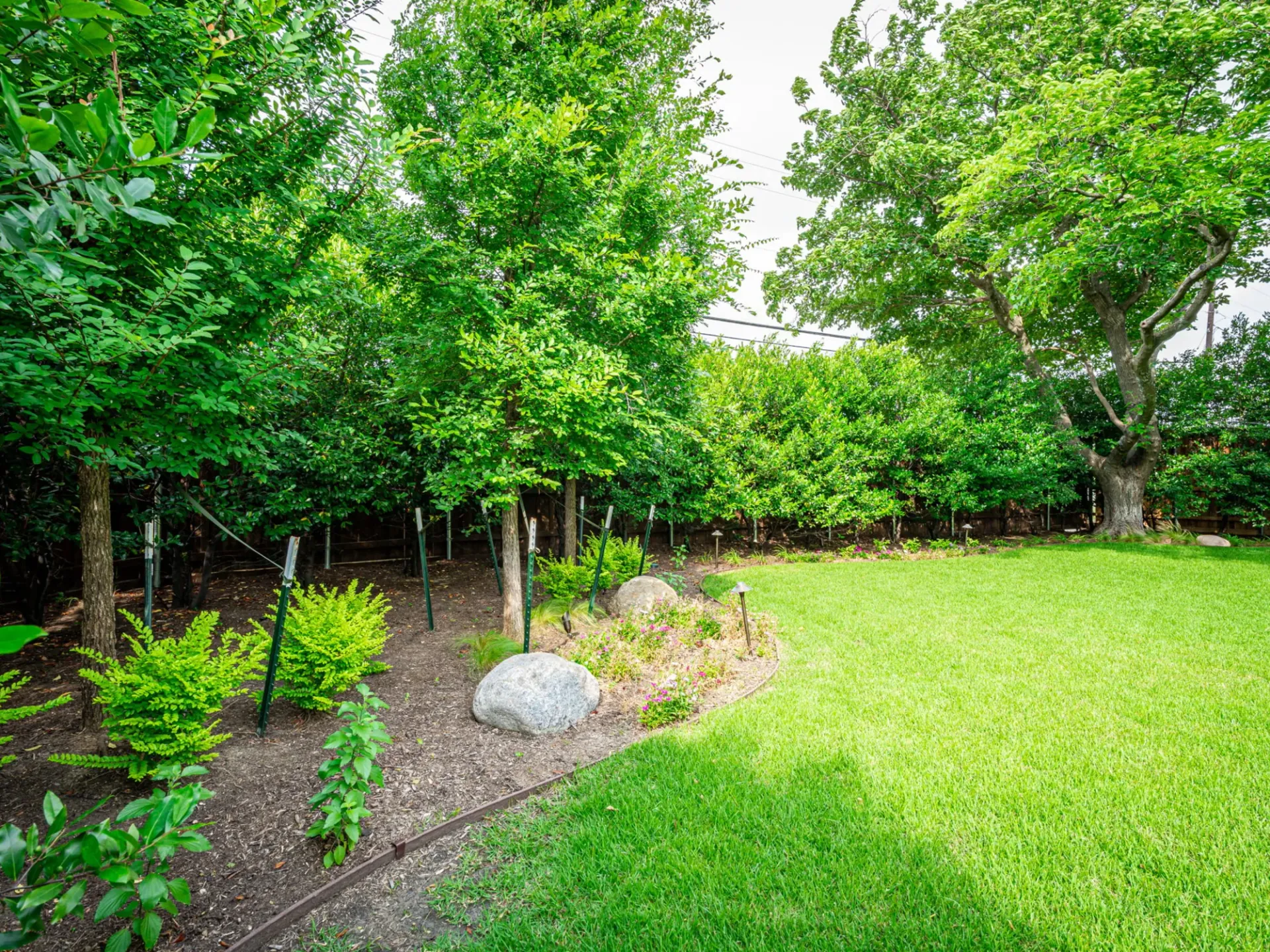
Water problems in a yard do not always start on that property. In many Dallas and Plano neighborhoods, runoff from a neighboring lot can create drainage issues that affect lawn areas, planting beds, patios, walkways, fences, and even the way a backyard feels day to day. A homeowner may notice standing water after storms, soggy ground along a property line, washed-out mulch, or erosion in places that seem to get worse every season. In many cases, the real issue is not only what happens on that lot. It is also what flows into it.
This is a common challenge in established neighborhoods, homes with elevation changes, tighter suburban lots, and areas where grading patterns push water from one yard to the next. A property may have a decent layout on its own and still struggle because runoff from uphill lots or nearby hard surfaces adds more water than the landscape can handle. That extra water puts stress on the yard and can slowly damage the way the entire outdoor space works.
Homeowners in Dallas and Plano benefit from understanding how neighboring runoff affects their property. A clear view of the problem helps explain why some drainage issues keep coming back and why simple fixes often do not last.
Why Neighboring Runoff Becomes A Landscape Problem
Water follows slope. That sounds simple, but it has a big effect on residential landscapes. Rainwater does not stop at property lines. It keeps moving downhill or toward the path of least resistance. In neighborhoods where one lot sits slightly higher than another, runoff often moves from one yard into the next. It may arrive as sheet flow across the lawn, concentrated water near a side yard, or repeated pooling along a rear fence line.
This becomes a bigger issue when the receiving yard already has slow-draining soil or limited ways for water to exit. Dallas and Plano properties often deal with clay-heavy soil, which can hold water longer and make soggy areas harder to recover. A yard that might have handled normal rainfall on its own can start to struggle once neighboring runoff adds more volume.
That is why some drainage problems feel confusing to homeowners. They maintain their yard well, but certain areas still stay wet or deteriorate after storms. The water source may begin next door.
Property Lines Do Not Control Water Movement
Many homeowners assume that since fences, walls, or lot lines define ownership, they also define how water behaves. In reality, runoff does not respect those boundaries. A side yard can take in water from a neighbor’s roof drainage pattern, patio slope, or higher lawn elevation. A backyard may collect runoff from several lots at once, especially when homes sit in a subtle bowl or low point.
This issue often shows up in places where the grade between homes seems minor but still directs water in one direction. A difference of only a few inches can influence how stormwater moves. During heavy rainfall, that difference becomes much more noticeable.
This is one reason drainage work needs careful site evaluation. A yard may seem like the problem area because that is where the water ends up. The real drainage story usually includes a larger pattern involving nearby properties and how their elevations interact.
Side Yards Often Show The First Signs
One of the most common places to see runoff from neighboring properties is the side yard. These spaces often sit between houses where slope, fencing, downspouts, and narrow access all combine to affect water movement. A side yard may stay damp longer than the rest of the property, develop thin turf, or collect water near the fence line after every storm.
This happens because side yards often act like channels. Water from an uphill lot or a neighboring roof may move along the boundary and settle in low sections. Even when there is no obvious standing water, repeated moisture can weaken the ground and create a soft, unreliable surface.
In Dallas and Plano, where many side yards already deal with limited sunlight and tighter airflow, extra runoff can make those spaces even harder to manage. That is why homeowners often notice that their drainage problem starts in one side yard and then spreads into the rest of the landscape.
Neighboring Runoff Can Damage Lawns And Planting Beds
Too much incoming water can wear down more than the ground surface. It can affect the health and appearance of the landscape itself. Lawn areas may thin out or develop muddy patches. Planting beds may lose mulch, expose roots, or stay wet long enough to stress shrubs and other plant material. The yard may feel unstable or messy even after the rain has passed.
This problem gets worse when runoff repeatedly enters the same place. Over time, the water can carve channels, compact soil, and push debris into areas that should stay clean and usable. Even a carefully maintained bed can start to break down when outside water keeps rushing through it.
Many homeowners first notice the visual symptoms and assume the bed or lawn simply needs cleanup. The deeper issue is often uncontrolled runoff entering from beyond the property line.
Hardscape Can Also Suffer From Outside Water
Patios, walkways, paver edges, retaining walls, and other hardscape features can also feel the effects of neighboring runoff. Water that repeatedly moves across or around hardscape can wash out supporting material, stain surfaces, or create soft ground beside edges that should stay stable. Over time, that can lead to surface movement, uneven transitions, or a patio area that no longer drains the way it should.
In higher-end landscapes, this matters a great deal because hardscape often serves as the framework for the entire outdoor space. A beautiful patio or walkway can start to underperform if water from surrounding lots keeps putting pressure on it.
This is another reason drainage solutions need to look beyond the immediate symptom. Fixing the patio surface alone may not solve anything if the real issue is water entering from uphill properties during every major rain.
Fences And Boundaries Can Trap Water In The Wrong Places
Homeowners often assume a fence protects the yard from outside drainage issues. In some cases, fencing can actually make runoff problems worse. Water may move from a neighboring lot toward the fence line and then slow down, pool, or concentrate in one section of the yard. That can leave a strip of wet ground that stays soft long after the surrounding areas have dried.
Rear fence lines are especially vulnerable when several yards drain toward the same shared boundary. A homeowner may end up dealing with moisture from multiple directions without realizing how much outside runoff is involved.
This does not mean the fence causes the problem by itself. It means the fence becomes part of how the water behaves once it reaches the property. Understanding that relationship helps explain why some rear-yard drainage issues feel persistent and hard to solve with surface cleanup alone.
Drainage Problems Often Get Worse Over Time
Neighboring runoff rarely stays the same forever. It can become more noticeable as nearby landscapes change. A neighbor may add hardscape, alter grading, replace lawn with a faster-shedding surface, or install new drainage that redirects water. Tree growth and soil movement can also shift how runoff behaves across several yards.
This is why some homeowners say their property never used to have drainage trouble and now does. The surrounding conditions may have changed gradually until the runoff pattern became more aggressive or more concentrated.
In Dallas and Plano, ongoing development, home improvement projects, and long-term soil movement can all influence these patterns. A drainage issue that feels new may actually be the result of years of small changes around the property.
Why Simple Surface Fixes Often Fall Short
A homeowner dealing with neighboring runoff may try quick solutions first. Extra mulch, new sod, minor regrading in one spot, or temporary water redirection may seem to help at first. These efforts often fail because they do not address the full volume and direction of the incoming water.
A yard that takes runoff from another property needs a solution that accounts for the outside source. That usually means understanding the water path, the low points, the speed of runoff, and the best route for moving that water away from usable areas. Without that bigger view, the same trouble spots usually return.
This is why drainage solutions should be planned, not improvised. A repeated problem usually points to a water pattern that needs a more deliberate response.
Good Drainage Planning Starts With The Whole Site
A proper response to neighboring runoff starts with understanding the full site, not just the wettest area. The landscape needs to be evaluated as a system. That includes the property’s grade, the adjacent lot elevations, the location of downspouts, hard surfaces, fence lines, drainage exits, and the areas where water enters and collects.
This kind of planning helps clarify what the yard needs. Some properties need stronger interception near the property line. Some need better water routing across the yard. Some need surface correction and below-grade drainage support working together. The right solution depends on how the water behaves, not just where it is visible.
For homeowners in Dallas and Plano, this kind of site-specific approach matters because no two runoff patterns are exactly alike. Even neighboring homes on the same block can have very different drainage needs based on grade, lot shape, and surrounding improvements.
Better Water Control Helps The Whole Landscape Perform Better
Once runoff from neighboring properties is handled more effectively, the benefits usually show up across the yard. Lawn areas recover better. Beds stay cleaner. Surfaces stay more stable. Hardscape performs more consistently. The property becomes easier to use after storms and less frustrating to maintain through the seasons.
That kind of improvement is about more than solving a puddle. It is about helping the landscape function the way it should. A well-planned yard should not feel like it is constantly reacting to problems from outside its boundaries. It should feel stable, usable, and better protected from the water patterns around it.
In Dallas and Plano, that level of drainage control can make a major difference in how comfortable and reliable an outdoor space feels year-round.
FAQs
What Is Neighboring Runoff In A Residential Landscape?
Neighboring runoff is rainwater or surface water that flows from a nearby property into your yard because of slope, grade, or drainage patterns.
Why Does My Yard Stay Wet Even If I Take Care Of It?
Your yard may be receiving water from uphill or adjacent properties, which can create soggy areas even when your own landscape is well-maintained.
Can Runoff From Another Property Damage My Lawn Or Beds?
Yes. Repeated runoff can wash out mulch, thin turf, erode soil, and leave planting areas too wet for healthy growth.
Why Are Side Yards In Dallas And Plano More Likely To Have Drainage Problems?
Side yards often act as narrow channels where water from roofs, slopes, and neighboring lots collects and moves through the property.
Do Fences Stop Drainage Problems From Neighboring Properties?
No. Fences may mark the property line, but water can still flow toward, under, or along them and collect in low areas.
Stewart Lawncare & Landscape helps homeowners solve drainage issues caused by neighboring runoff in Dallas and Plano, TX. Call (972) 429‑1921.